
In traditional and modern Japanese society, the concept of “responsibility” carries a unique structure that differs fundamentally from its Western counterpart.
The English word responsibility originates from the Latin respondere, meaning “to respond.” In its modern usage, it generally refers to the ability or obligation to respond for one’s own actions. This reflects an individualistic framework in which the person who commits an act bears personal accountability for its outcomes.
By contrast, the Japanese concept of responsibility often extends beyond the individual, encompassing the social and hierarchical relationships within which a person operates. In many cases, even if someone is not the direct actor, those in positions of guidance or authority—such as mentors, parents, or superiors—may be expected to take responsibility for actions committed by their subordinates or dependents.
A vivid historical example of this is the case of Sakuma Shōzan, a scholar and mentor of Yoshida Shōin, one of the most influential intellectuals of the Bakumatsu period. In 1854, Shōin attempted to secretly board a foreign ship in violation of national law. Though Sakuma had no direct involvement in the incident, he was arrested and imprisoned by the Tokugawa shogunate on the grounds that he had failed in his responsibility as a teacher. This was not merely a moral rebuke, but a legal and institutional response grounded in the notion that the teacher bears responsibility for the conduct of the student.
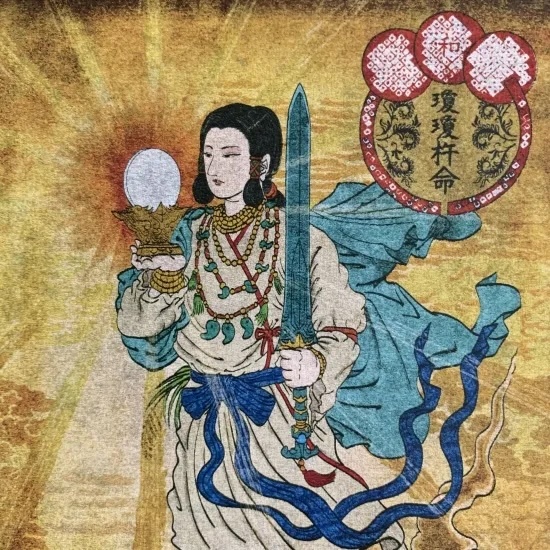
This relational understanding of responsibility also appears in Japanese mythology. According to the ancient chronicles, the sun goddess Amaterasu entrusted the rule of the earthly realm (Ashihara-no-Nakatsukuni) to her descendant Ame-no-Oshihomimi. However, instead of descending himself, Ame-no-Oshihomimi delegated the mission to his son, Ninigi-no-Mikoto, who then carried out the task. Importantly, although the son performed the act, the original mandate had been given to the father, who remained morally and symbolically responsible for the outcome.
This concept of “relational responsibility”—that is, the idea that one’s position in a relationship obliges one to respond to the consequences of another’s actions—is still very much alive in contemporary Japanese society.
For example, when scandals or failures occur within corporations or public institutions in Japan, senior executives or top officials often resign or publicly apologize, even if they were not personally involved in the wrongdoing. This is not necessarily an admission of personal fault, but rather an expression of responsibility associated with their position within a social or organizational structure.
Similar resignations do happen in Western contexts, but often for different reasons—typically related to a failure of leadership, personal negligence, or lack of oversight. In Western legal and ethical frameworks, responsibility is usually framed in terms of individual accountability and performance, rather than relational obligation.
In Japan, however, the idea that “being in a certain position means one bears responsibility for what happens within that sphere” is not just a psychological tendency or cultural nuance—it is a widely recognized social norm that informs real-world behavior, institutional practices, and public expectations. This makes relational responsibility a distinctive and enduring feature of Japanese ethics, rarely seen in the same form in Western societies.
by Zenko Onagi
【日本語訳】
日本的責任観と“関係的責任”の文化構造〜〜西洋の responsibility 概念との対照を通じて
日本社会における「責任」には、西洋における responsibility とは異なる独自の構造が存在します。
英語の responsibility は、ラテン語 respondere(応答する)を語源とし、「自らの行為に対して応答する能力・義務(the ability or obligation to respond)」を意味します。これは、「自分の行動に対して自分が責任を負う」という個人主義的な原則を前提としています。
それに対して日本では、個人の行為であっても、その人が属する関係性や上下関係の中で発生したものであれば、“立場上の者”が責任を問われるという価値観が存在します。つまり、行為の当事者でなくとも、その者を導き、見守る立場にある人間が応答責任を負うという考え方です。
このような関係的責任の構造は、たとえば1854年の吉田松陰による外国船密航未遂事件において明確に表れています。松陰の師であった佐久間象山は、事件に直接関与していなかったにもかかわらず、「そのような門弟を育てた責任者」として幕府に逮捕・投獄されました。ここで問われたのは、道義的な非難ではなく、現実に制度的・法的な処分としての責任です。
この背景には、日本神話における天忍穂耳命と邇邇芸命の関係に象徴されるような価値観が見え隠れしています。
天照大御神から「葦原中国を治めよ」と命じられたのは天忍穂耳命ですが、彼はその使命を自ら遂行せず、息子の邇邇芸命に委ね、邇邇芸命が地上へと降臨しました。ここで示されるのは、「命を受けた者が他者に実行を委ねた場合でも、その結果については命を受けた者自身が責任を負う」という関係性に基づく連帯責任の構造です。
この考え方は、現代日本においても社会通念として機能し続けています。
企業や行政機関などで不祥事が発生した際には、当該の事件当事者が組織の下層にいたとしても、その上司や組織の長が責任を取り、謝罪や辞任をするという対応がしばしば見られます。これは単なる個人の資質の問題ではなく、「その組織的関係性の中において上位者には応答義務がある」という文化的な常識に基づいています。
欧米においても、トップが辞任することはありますが、その背景には「説明責任(accountability)」や「監督不行き届きによる職務遂行能力の欠如」といった職能上の不備が主な理由とされる傾向があります。
一方、日本における責任の取り方は、「関係性の中にいたことそのものが責任を生む」という文化的な応答義務に基づいており、これは西洋的個人責任論とは異なる倫理体系に根ざしています。
こうした「関係上の立場が責任を呼ぶ」という考え方は、単なる深層意識の問題ではなく、現代社会における一般常識として制度や慣行の中に組み込まれており、諸外国にはほとんど見られない、日本文化の大きな特徴のひとつであるといえます。